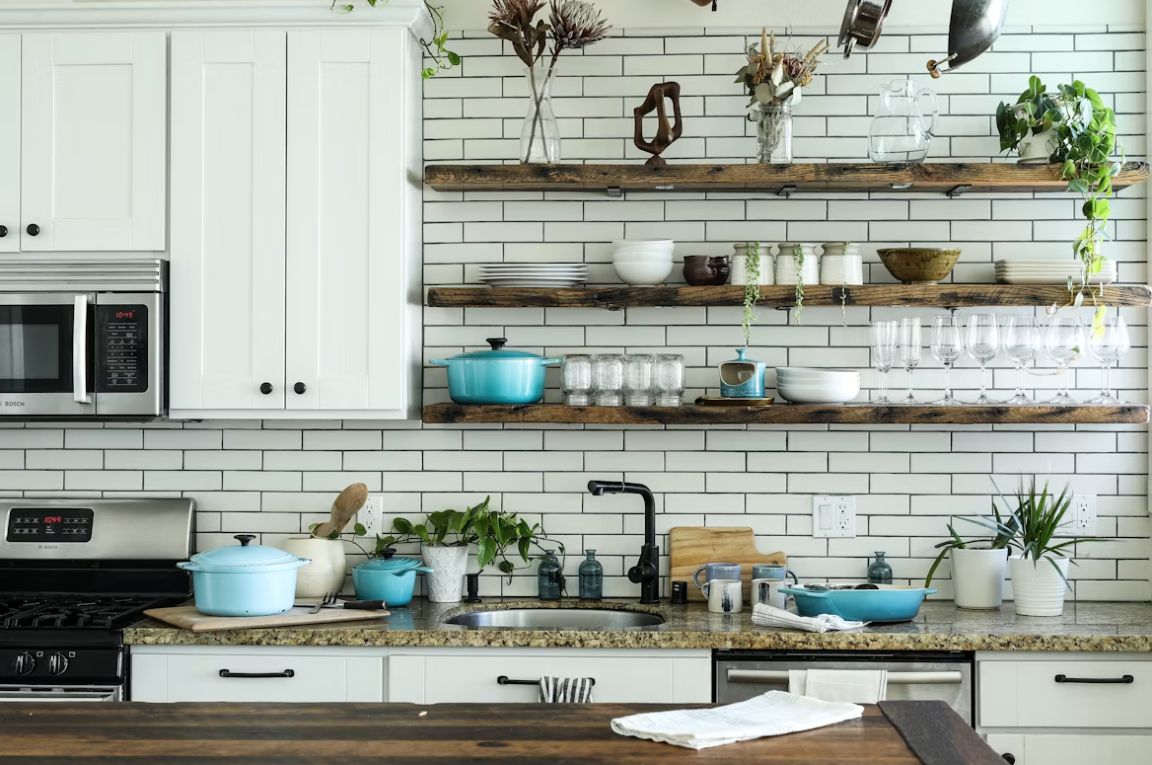
The first weeks in a new home often feel like a series of small discoveries. You find the perfect place for the coffee maker, realize the nearest grocery store closes earlier than expected, and discover at dinner time that you own three spatulas but no can opener. A kitchen can look finished long before it is truly functional.
For new homeowners, the smartest approach is not to fill every drawer immediately. A well-equipped kitchen grows from a dependable core of tools that support the meals you actually cook. The best everyday kitchen essentials are versatile, comfortable to use, easy to clean, and durable enough to survive busy mornings, rushed weeknight dinners, and occasional experiments that do not go according to plan.
This guide focuses on practical essentials rather than decorative gadgets or highly specialized appliances. Some kitchens will eventually need a stand mixer, Dutch oven, rice cooker, or espresso machine, but those purchases can wait until your habits become clearer. Start with the tools that solve everyday problems, then build around your lifestyle.
A Reliable Chef’s Knife
A chef’s knife is the tool that quietly participates in almost every homemade meal. It slices onions, chops herbs, portions meat, cuts fruit, and turns a pile of vegetables into dinner. For most new homeowners, one comfortable and well-balanced chef’s knife is more useful than a large block filled with blades of uncertain purpose.
An eight-inch blade is a practical starting point for many cooks, although people with smaller hands may prefer something slightly shorter. The knife should feel secure rather than heavy, and the handle should remain comfortable when your hands are damp.
Blade material matters, but maintenance matters more. Even a premium knife becomes frustrating when it is dull. A honing tool can help maintain the edge between sharpenings, while professional or appropriate home sharpening restores an edge that has worn down.
Avoid storing a good knife loose in a crowded drawer. A blade guard, magnetic strip, or compact knife block protects both the edge and your hands. Hand washing and immediate drying are generally kinder to kitchen knives than the dishwasher.
Two Practical Cutting Boards
One cutting board is rarely enough for a smoothly functioning kitchen. A large board provides room for vegetables, bread, and general meal preparation, while a smaller board is convenient for fruit, garnishes, or quick tasks.
Many homeowners prefer to keep a separate board for raw meat or poultry. This makes it easier to manage food preparation without repeatedly stopping to wash the only available surface.
Wood boards are attractive and pleasant under a knife, but they require hand washing and occasional care. Plastic boards are lighter, often dishwasher-safe, and easy to dedicate to specific ingredients. Whichever material you choose, look for a stable surface that does not slide across the counter.
A damp kitchen towel or nonslip mat beneath the board can improve stability. Deeply worn boards with hard-to-clean grooves should eventually be replaced.
A Versatile Cookware Starter Set
New homeowners are often tempted by enormous cookware sets because they appear to solve every possible need at once. In practice, a few well-chosen pieces usually perform most everyday jobs.
A useful starting collection includes a medium saucepan with a lid, a larger pot for pasta or soup, and a skillet large enough for your usual household portions. A second small skillet can be convenient, but it is not essential on the first day.
Material influences cooking style. Stainless steel is durable and suitable for browning, sauces, and many high-heat tasks, although it has a learning curve. Nonstick cookware is convenient for eggs, pancakes, and delicate foods but requires gentler utensils and careful temperature management. Cast iron retains heat well and can move from stovetop to oven, though it is heavier and needs appropriate care.
Before buying, confirm that the cookware is compatible with your cooktop. This is especially important for induction ranges, which require magnetic cookware.
One Dependable Sheet Pan
A sturdy rimmed sheet pan may be one of the most productive pieces of equipment in a new kitchen. It can roast vegetables, bake cookies, cook chicken, warm bread, toast nuts, and hold an entire sheet-pan dinner.
Rimmed edges contain juices and make the pan easier to carry. A standard half-sheet size is useful for many household ovens, but smaller pans may be more practical in compact kitchens or countertop ovens.
Parchment paper or reusable baking mats can simplify cleanup, though they are not needed for every recipe. A fitted wire rack adds more versatility by lifting foods above the pan for cooling, roasting, or allowing air to circulate.
Thin pans may warp at high temperatures, so construction is worth considering. The best sheet pan is not necessarily glamorous, but it will probably be used more often than many specialized bakeware pieces.
Mixing Bowls That Nest
Mixing bowls are needed for much more than baking. They hold chopped ingredients, dress salads, mix marinades, collect scraps, and make it easier to keep preparation organized.
A nesting set in three or four sizes offers flexibility without occupying excessive cabinet space. Stainless steel bowls are lightweight, durable, and easy to handle, while glass bowls allow you to see the contents and may also work in the microwave. Plastic bowls are light and affordable, but they can absorb odors or stains over time.
Look for a wide base that feels stable during mixing. Pouring spouts, nonslip bottoms, and fitted lids can be useful, but they are optional rather than essential.
The most important question is whether the bowls fit comfortably in your cabinets and dishwasher. A beautifully designed set that is awkward to store will quickly become a source of irritation.
Measuring Cups, Spoons, and a Digital Scale
Even experienced cooks need reliable measuring tools. A basic set of dry measuring cups and measuring spoons handles everyday recipes, while a liquid measuring cup makes it easier to read volume at eye level.
A digital kitchen scale adds precision without taking much space. It is especially useful for baking, dividing portions, measuring coffee, and following recipes written by weight. Because ingredients can be added to one bowl and the display reset between each addition, a scale can also reduce the number of cups and spoons that need washing.
Choose measuring sets with markings that are easy to read and unlikely to fade. Cups that nest and spoons held together by a removable ring are easier to store.
Accuracy is important, but complicated features are not. A clear display, dependable tare function, and straightforward unit conversion will satisfy most home kitchens.
A Heat-Safe Utensil Set
A few dependable utensils are more valuable than a crowded container of nearly identical tools. Start with a sturdy spatula or turner, a silicone spoon, a ladle, a whisk, and a pair of locking tongs.
Silicone tools are gentle on coated cookware and can handle many hot cooking tasks when designed for appropriate temperatures. Stainless steel utensils are durable and useful with uncoated pans but can damage nonstick surfaces.
Tongs should open and close smoothly with one hand. A whisk should feel balanced and fit into your saucepans. A spatula needs a thin enough edge to slide beneath food without folding or bending excessively.
Skip large utensil bundles unless you know you will use every piece. Duplicate tools occupy drawer space and make it harder to find the one you actually want.
A Colander and Fine-Mesh Strainer
A colander handles pasta, washed vegetables, and larger quantities of food. A fine-mesh strainer performs smaller and more delicate jobs, such as rinsing grains, draining canned ingredients, sifting dry ingredients, or straining sauces.
These two tools overlap slightly but are not interchangeable. Rice and quinoa can slip through a wide colander, while a small strainer may be inconvenient for a full pot of pasta.
Choose a colander with a stable base and handles that remain easy to grip when the bowl is full. For a fine-mesh strainer, inspect the connection between the mesh and frame, since weak construction can loosen over time.
If storage is limited, a collapsible colander may be useful, but check that it expands securely and drains without sagging.
A Box Grater or Microplane-Style Grater
Freshly grated cheese, citrus zest, garlic, ginger, chocolate, and spices can bring noticeable flavor to simple meals. A box grater provides several surfaces for different textures, while a narrow fine grater takes up less space and excels at zesting and finely grating hard ingredients.
New homeowners who cook a wide range of meals may appreciate the flexibility of a box grater. Those with compact drawers or simpler routines may prefer one sharp, fine grater.
A comfortable handle and stable base make grating safer. A dull grater demands more pressure, which increases slipping and produces uneven results.
Protect the grating surface during storage and wash carefully. The same sharp edges that work efficiently on food are unforgiving on fingers and dishcloths.
A Manual Can Opener and Kitchen Shears
Can openers and kitchen shears are easy to forget because they are rarely the centerpiece of a meal. Their absence becomes obvious at exactly the wrong moment.
A manual can opener should turn smoothly, cut cleanly, and feel comfortable in the hand. Oversized handles may be helpful for people who find narrow metal tools difficult to grip.
Kitchen shears can trim herbs, open food packaging, cut parchment, divide flatbreads, and handle many small jobs that do not justify using a knife. Models designed to separate into two pieces are easier to clean thoroughly.
Avoid using food-preparation shears for household projects, cardboard, or materials that may damage or contaminate the blades. Giving them a defined place in the kitchen prevents them from disappearing into a general utility drawer.
Food Storage Containers
Leftovers, chopped ingredients, packed lunches, and meal-prep portions all need reliable storage. A mismatched collection of containers and lids can turn one cabinet into an ongoing puzzle, so new homeowners benefit from choosing a coordinated system.
Glass containers are heavier but resist staining and allow the contents to remain visible. Plastic containers are lighter and convenient for transportation, though quality and care requirements vary. Both can work well when lids seal securely and the shapes stack efficiently.
Rectangular containers generally use refrigerator space more efficiently than round ones. A range of small, medium, and larger sizes is more practical than owning many tiny containers that cannot hold a full serving.
Avoid purchasing too many pieces before you understand your routine. Begin with enough containers for several meals, then expand only if necessary.
An Instant-Read Food Thermometer
A food thermometer removes much of the guesswork from cooking meat, poultry, fish, baked goods, and reheated dishes. Appearance alone does not always reveal whether food has reached an appropriate internal temperature.
An instant-read model is compact and simple to use. Look for a clear display, a probe that folds or stores safely, and a response time that does not require holding your hand over a hot pan for too long.
A thermometer is useful not only for safety but also for avoiding unnecessary overcooking. Checking temperature can help protect moisture and texture, particularly when cooking smaller portions.
Clean the probe between uses and follow appropriate food-safety guidance for the ingredients you prepare.
A Simple Coffee or Tea Setup
For many homeowners, the morning beverage station becomes one of the most frequently used parts of the kitchen. It does not need to be elaborate. A dependable coffee maker, electric kettle, French press, or pour-over system can be enough.
Choose according to your actual routine. A programmable drip machine suits households that drink several cups, while a kettle and tea infuser may be more useful for tea drinkers or people who prepare several types of hot beverages.
Remember to account for filters, coffee storage, mugs, cleaning, and available counter space. The machine is only one part of the setup.
Avoid buying an advanced system because it represents an imagined lifestyle. The best beverage tool is the one you will happily use on an ordinary weekday.
A Fire Extinguisher and Basic Safety Tools
Not every kitchen essential is used for cooking. A suitable fire extinguisher, functioning smoke alarms, oven mitts, and a first-aid kit are foundational parts of a well-prepared home.
Keep safety equipment accessible and learn how it is intended to be used before an emergency occurs. A fire extinguisher hidden behind heavy boxes or installed where heat and flames could block access is less useful.
Oven mitts should protect the hands and wrists without becoming so bulky that they reduce grip. Replace worn or damaged mitts that no longer provide dependable insulation.
Home safety requirements and recommendations can vary by location and property type, so homeowners should follow applicable local guidance and manufacturer instructions.
What New Homeowners Can Buy Later
Not every kitchen purchase needs to happen during the move. Stand mixers, bread machines, high-powered blenders, pressure cookers, juicers, ice cream makers, and specialty bakeware can be valuable, but they should follow real habits.
Live in the kitchen for a few weeks. Notice which tasks feel repetitive, which meals you prepare most often, and which tools you repeatedly wish you had.
This pause prevents cabinets from filling with products selected for someone else’s routine. It also allows you to invest more confidently when a genuine need becomes clear.
Common Kitchen Setup Mistakes
One common mistake is buying complete sets without examining the individual pieces. Large knife, cookware, and utensil bundles may include several items that are rarely used.
Another is prioritizing appearance over comfort. A stylish handle may look attractive but feel awkward when a pan is full or your hands are wet.
New homeowners also tend to underestimate storage. Measure drawers, shelves, cabinets, and counter clearances before purchasing bulky tools or appliances.
Finally, avoid buying several versions of the same function. One reliable chef’s knife is a better starting point than multiple mediocre knives, and one versatile skillet is more useful than a stack of pans that behave almost identically.
Conclusion
The best everyday kitchen essentials for new homeowners create a foundation rather than a finished collection. A reliable knife, stable cutting boards, versatile cookware, a sheet pan, nesting bowls, measuring tools, and a small set of utensils can support an impressive range of meals.
Storage containers, a food thermometer, a can opener, kitchen shears, and basic safety equipment complete the practical side of the kitchen. Everything else can be added gradually as your routines become clearer.
A new kitchen does not need to be filled overnight. Choose tools that feel comfortable, fit the available space, and solve tasks you perform regularly. Over time, the kitchen will become more than a room stocked with objects. It will become a workspace shaped around the way you live.
Frequently Asked Questions
What kitchen essentials should a new homeowner buy first?
Begin with a chef’s knife, cutting board, skillet, saucepan, larger pot, sheet pan, mixing bowls, measuring tools, basic utensils, and food storage containers. These items support most everyday meals and provide a practical foundation before specialized equipment is added.
Is it better to buy a cookware set or individual pieces?
Individual pieces often provide better value because you can select sizes and materials that match your cooking style. A small set can still be convenient when every included piece is useful. Avoid large collections filled with duplicate or highly specialized pans.
How much should new homeowners spend on kitchen tools?
There is no single ideal budget. Spend more on frequently used items where comfort, durability, and performance matter, such as knives and cookware. Basic measuring tools, bowls, and utensils can often be purchased more affordably without sacrificing everyday usefulness.
Which kitchen appliances are essential for a first home?
Appliance needs vary by household. A refrigerator and cooking surface are fundamental, while a microwave, kettle, toaster, coffee maker, blender, or air fryer depends on personal habits. Buy appliances according to meals and drinks you already prepare regularly.
How can I avoid clutter when setting up a new kitchen?
Start with a short list of versatile essentials, measure storage areas before shopping, and avoid oversized bundles. Give every item a realistic storage location. Add specialty tools only after repeated use shows that they will solve a genuine problem.