There is a familiar little ritual that happens at the end of a long day: keys on the table, bag on the chair, phone dropped somewhere within reach, battery percentage quietly sinking. By the time you need to reply to one more message, stream a playlist, or check tomorrow’s calendar, your phone is already asking for a charger. The old solution was a drawer full of cables. The modern solution is gentler, cleaner, and far more convenient: a wireless charger placed exactly where you already live, work, and travel.
The best wireless chargers do not simply power your devices. They make charging feel effortless. A pad on the nightstand becomes part of your bedtime rhythm. A stand on your desk keeps your phone visible during the workday. A foldable travel charger saves you from packing three separate cables for your phone, earbuds, and smartwatch. Like good lighting or a well-designed bag, a good charger quietly improves your daily routine without asking for attention.
Still, wireless charging is not always simple. Some chargers are better for iPhones, some are better for Android phones, some are made for multiple devices, and others look beautiful but charge slowly or require careful placement. Terms like Qi, Qi2, MagSafe, magnetic alignment, wattage, heat control, and charging coils can make a simple purchase feel more technical than it needs to be.
This guide is designed to help you choose the best wireless chargers for home, office, and travel with confidence. Instead of chasing the most expensive model or the boldest charging-speed claim, we will focus on real everyday needs: convenience, compatibility, stability, design, safety, and value.
Why Wireless Charging Is So Useful
Wireless charging is not always the fastest way to charge a device, but it is often the easiest. That is its real appeal. You do not have to search for a cable in the dark, worry about fraying connectors, or plug and unplug your phone multiple times a day. You simply place your device on a charging surface and let it top up while you continue with your routine.
This makes wireless charging especially useful in places where your phone naturally rests. At home, that might be a bedside table, kitchen counter, entryway console, or living room shelf. At the office, it might be your desk, meeting room, or work-from-home setup. While traveling, it might be a hotel nightstand, airport lounge, or compact pouch in your carry-on.
The beauty of wireless charging is not only convenience. It also encourages better habits. A charger in the right place helps you keep your phone powered without waiting until the battery is nearly empty. A stand can reduce desk clutter. A multi-device charger can simplify your nightly routine. Over time, the right charger feels less like a gadget and more like part of the furniture.
Understanding Qi, Qi2, and Magnetic Charging
Most modern wireless chargers use the Qi wireless charging standard. Qi compatibility is important because it helps ensure that phones, earbuds, and other supported devices can charge on certified chargers from different brands. For shoppers, this means you should look for clear compatibility details rather than assuming every wireless charger works equally well with every device.
Qi2 is a newer generation of the standard that brings magnetic alignment into the experience. Magnetic alignment matters because wireless charging works best when the device is positioned correctly over the charging coil. If the phone is slightly off-center, charging can slow down, stop, or produce more heat. A magnetic charger helps the device snap into place, creating a more consistent charging experience.
For iPhone users, MagSafe-style magnetic charging has become especially familiar. For Android users, magnetic wireless charging depends more on the phone model, case, and charger compatibility. Some Android phones work with Qi wireless charging but may not attach magnetically unless paired with a compatible magnetic case or accessory.
The practical takeaway is simple: do not buy based on the word “wireless” alone. Check whether your device supports Qi, Qi2, MagSafe-style magnetic charging, or a specific brand charging system. Compatibility is the difference between a charger that becomes a daily essential and one that sits unused in a drawer.
Best Wireless Chargers for Home
Home is where wireless charging feels most natural. It is also where you can choose a charger based on comfort, design, and daily flow rather than pure portability.
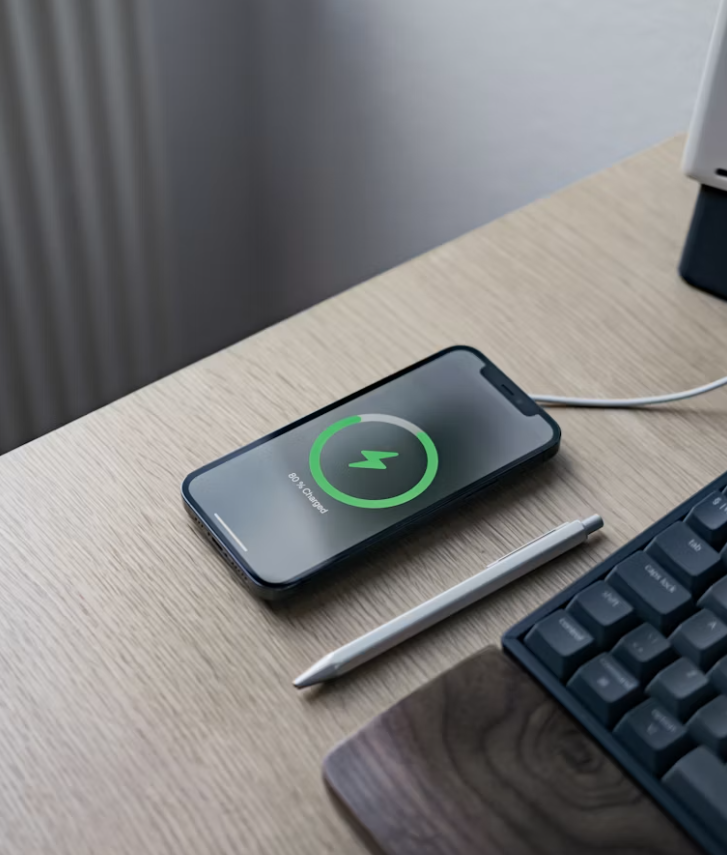
For a bedside table, a wireless charging stand is often better than a flat pad. A stand lets you see the time, alarms, notifications, or sleep mode screen without lifting the phone. It also reduces the chance of placing the phone slightly wrong in the dark. If your phone supports magnetic alignment, a magnetic stand can make nighttime charging even easier.
For an entryway table or kitchen counter, a simple charging pad may be enough. This is a good place to drop your phone while cooking, unpacking groceries, or coming home from errands. A pad with a non-slip surface is helpful because phones can vibrate or slide on smoother materials.
For households with multiple devices, a three-in-one wireless charging station can be worth considering. These chargers often support a phone, earbuds, and a smartwatch in one tidy setup. They are especially useful if your nightstand or desk has become a nest of cables. Before buying, check whether the watch charger is built in or requires you to insert your own charging puck. That small detail can affect both price and convenience.
Design also matters more at home than many people expect. A charger that sits in plain view should look calm, stable, and intentional. Neutral colors, soft finishes, weighted bases, and good cable management can make a charger feel like part of the room rather than a tech accessory dropped into it.
Best Wireless Chargers for the Office
At the office, the best wireless charger is usually one that supports focus. It should keep your phone charged without turning it into a distraction. A stand-style charger is often the smartest choice because it lets your phone stay upright for quick glances at time, calendar reminders, or incoming calls.
For work desks, stability is important. A lightweight stand that tips over easily can become annoying. Look for a charger with a solid base and a viewing angle that suits your desk height. If you use video calls or productivity apps on your phone, a stand that supports both portrait and landscape orientation can be helpful.
Charging speed matters, but it is not everything. At a desk, your phone may sit on the charger for several hours, so reliable moderate charging can be more useful than aggressive fast charging. Heat control is also important. A charger that becomes noticeably hot during long work sessions may not be ideal for all-day desk use.
If you work between multiple locations, consider a slim wireless charging pad that fits into a laptop bag. It will not offer the same visibility as a stand, but it can be easier to carry. For shared workspaces, a charger with a clean, compact footprint is better than a bulky station with too many cables.
Office chargers should also be visually quiet. A glowing charger with bright lights may feel fun at first but distracting during focused work. Soft indicator lights, minimal design, and simple placement are usually better choices.
Best Wireless Chargers for Travel
Travel changes the rules. At home, a charger can be beautiful and permanent. On the road, it needs to be compact, durable, and easy to pack. The best travel wireless chargers reduce cable clutter without adding unnecessary bulk.
Foldable chargers are especially useful for travelers who carry multiple devices. A compact three-in-one travel charger can replace separate cables for a phone, earbuds, and smartwatch. Some fold into a small square or slim case, making them easy to fit into a backpack, handbag, or carry-on pocket.
A magnetic wireless power bank is another useful travel option. It attaches to the back of a compatible phone and charges without a cable while you are moving through airports, trains, hotels, or daily errands. This is convenient for short top-ups, but it is worth remembering that wireless power banks can be less efficient than wired charging. For long travel days, choose one with enough capacity and keep a USB-C cable as backup.
For hotels, a flat pad or foldable stand can be useful on a nightstand. Look for models with a detachable cable rather than a fixed cable. If the cable gets damaged or lost, it is easier to replace. USB-C input is preferable for most modern travel setups because it reduces the number of different cables you need to pack.
Travel chargers should be simple and dependable. Avoid overly complicated models with fragile hinges, bulky adapters, or confusing layouts. When you are tired after a flight, the best charger is the one that works without negotiation.
Single-Device vs Multi-Device Chargers
One of the biggest decisions is whether to buy a single-device charger or a multi-device charging station. Each has its place.
A single-device charger is usually more affordable, compact, and flexible. It is ideal if you only need to charge your phone wirelessly or if you prefer to keep other devices on their original chargers. Single pads and stands are also easier to place in different rooms.
A multi-device charger is better if you own several compatible devices and want a cleaner setup. It can be especially useful for phone, earbuds, and smartwatch users. Instead of three cables, you get one charging station. The tradeoff is that multi-device chargers tend to cost more, take up more space, and require closer attention to compatibility.
Before choosing a multi-device charger, check the exact devices it supports. Some stations work beautifully with Apple devices but may not be suitable for certain Android phones or non-Apple watches. Others may charge earbuds but only if the case supports wireless charging.
The right choice depends on your routine. If your priority is simplicity in one room, choose a single charger. If your priority is decluttering your nightstand or travel bag, a multi-device charger may be the smarter investment.
Charging Speed: What Really Matters
Wireless charging speed can be confusing because the number on the box is not always the speed your phone will actually receive. Charging depends on the charger, power adapter, cable, phone model, software, case, temperature, and alignment.
For everyday use, faster is helpful but not always essential. A bedside charger does not need to fill your phone in minutes if it will sit there overnight. A desk charger does not need maximum speed if your phone rests there during work. Travel chargers and power banks may benefit more from faster charging because time is limited.
Wattage is still worth checking. A charger with too little output may feel slow, especially for newer phones. However, do not judge by wattage alone. A well-designed charger with good alignment and heat management can feel more reliable than a higher-watt charger that overheats or frequently disconnects.
Also pay attention to the power adapter. Some wireless chargers do not include a wall adapter. If you use an underpowered adapter, your charger may not perform as expected. For the best experience, match the charger with a recommended USB-C power adapter from a reputable brand.
The Case Compatibility Question
Phone cases can affect wireless charging more than many shoppers realize. Thin plastic, silicone, or leather-style cases usually work well, but very thick cases, metal plates, wallet cases, pop-out grips, and magnetic accessories may interfere with charging.
If you use a magnetic wireless charger, case compatibility becomes even more important. A non-magnetic case may weaken attachment, while a poorly aligned magnetic ring may cause inconsistent charging. Look for cases that clearly support magnetic wireless charging or Qi2 compatibility if that matters for your phone.
For travel, it is smart to test your charger and case combination before leaving home. A charger that works perfectly with a bare phone may behave differently with your everyday case. Testing ahead of time prevents the unpleasant surprise of arriving at a hotel with a charger that will not reliably connect.
Heat, Safety, and Charging Habits
Wireless charging naturally produces some heat, but excessive heat is not ideal. A good charger should manage temperature reasonably and stop or reduce power if something is wrong. Look for chargers from reputable brands that mention safety features such as temperature control, foreign object detection, and over-voltage protection.
Avoid placing metal objects, coins, keys, or cards between your phone and charger. Do not use damaged cables or power adapters. If your phone or charger becomes unusually hot, remove the device and check the setup.
Charging habits also matter. It is fine to top up your phone during the day, but you do not need to keep every device on a charger constantly. Use wireless charging as a convenience tool, not as something to obsess over. Most modern devices manage charging intelligently, but common sense still helps.
Common Mistakes to Avoid
The first mistake is buying a charger without checking device compatibility. A charger may look perfect online but not support your phone, earbuds, or watch in the way you expect.
The second mistake is ignoring the power adapter. If the charger requires a stronger adapter and you use an old low-output plug, charging may feel slow.
Another common mistake is choosing style over stability. A beautiful charger that slides around, tips over, or requires perfect placement can quickly become irritating.
For travelers, the mistake is buying something too bulky. A travel charger should earn space in your bag. If it feels heavy, awkward, or fragile, you may stop packing it.
Finally, avoid assuming wireless charging should replace every cable. Wired charging is still useful, especially when you need speed, efficiency, or guaranteed power. The smartest setup often includes both.
How to Choose the Right Wireless Charger
Start with location. For a nightstand, choose a stand or multi-device station. For a desk, choose a stable upright charger. For the kitchen or entryway, a simple pad may be enough. For travel, choose a foldable charger or magnetic power bank.
Next, check device compatibility. Make sure your phone, earbuds, smartwatch, and case work with the charger. Then check whether the charger includes a cable and adapter or whether you need to buy them separately.
Consider your charging style. Do you charge overnight, during work, while traveling, or in quick bursts? Overnight users can prioritize design and reliability. Desk users can prioritize visibility and stability. Travelers should prioritize portability and flexibility.
Finally, think about clutter. The best wireless charger should make your space feel simpler, not more complicated. If a charger adds too many cables, lights, or awkward angles, it may not be the right fit.
A Balanced Final Takeaway
The best wireless chargers for home, office, and travel are not necessarily the fastest or most expensive. They are the ones that fit naturally into your routine. A bedside stand can make mornings smoother. A desk charger can keep your phone visible and powered. A travel charger can reduce cable clutter and simplify packing.
For most people, a thoughtful mix works best: one stable stand for the desk, one clean charger for the bedroom, and one compact option for travel. If you own multiple devices, a three-in-one charger can be worth it. If you mainly charge one phone, a simple magnetic stand or pad may be all you need.
Wireless charging should feel quiet, polished, and dependable. When chosen well, it removes a small daily annoyance and replaces it with a little more ease.
Conclusion
Choosing the best wireless charger is really about choosing better everyday flow. At home, it can tidy your nightstand and keep your devices ready. At the office, it can reduce cable clutter while keeping your phone accessible. On the road, it can simplify what you pack and help your devices stay powered through busy days.
Focus on compatibility, placement, charging speed, safety features, case support, and real-life convenience. Do not be distracted by features you will rarely use or speed claims your device cannot fully support. A good wireless charger is not the loudest tech purchase, but it is one you may appreciate every single day.
FAQs
What is the best type of wireless charger for home use?
For home use, a charging stand or multi-device charging station is often the most practical choice. A stand works well on a bedside table or desk because it keeps your phone visible, while a multi-device station can reduce cable clutter if you charge a phone, earbuds, and smartwatch every day.
Are wireless chargers good for travel?
Yes, wireless chargers can be useful for travel, especially foldable models and magnetic wireless power banks. They help reduce cable clutter and make hotel charging easier. However, it is still smart to pack a USB-C cable as backup for faster or more reliable charging when needed.
Does wireless charging work with phone cases?
Wireless charging works with many thin cases, but very thick cases, metal plates, wallet cases, and some grips can interfere. For magnetic chargers, use a case that clearly supports magnetic wireless charging or Qi2-style alignment if your phone is compatible.
Is wireless charging slower than wired charging?
In many situations, wireless charging is slower and less efficient than wired charging. However, it is often more convenient for overnight charging, desk use, and casual top-ups. Wired charging is still the better choice when you need the fastest possible charge.
Should I buy a Qi2 wireless charger?
A Qi2 charger can be a smart choice if your device supports it or if you want a more future-friendly magnetic charging setup. Magnetic alignment can make charging easier and more consistent. Before buying, check whether your phone and case are compatible.