There is a quiet luxury in a beauty routine that does not feel rushed, crowded, or complicated. The kind where your skincare glides on smoothly, your hair behaves with less effort, your makeup looks polished without requiring a drawer full of products, and everything you need is exactly where you expect it to be. A simple daily routine is not about doing less because you do not care. It is about choosing better, more useful tools so your morning and evening rituals feel calmer, cleaner, and easier to maintain.
The best beauty tools are not always the most expensive, the most talked-about, or the ones filling every social feed. Often, they are the practical pieces that help you get ready faster, apply products more evenly, keep your space organized, or turn small grooming steps into a smoother habit. A good eyelash curler, a soft cleansing brush, a reliable hair tool, or a well-designed makeup sponge can make a daily routine feel more refined without making it longer.
This guide focuses on beauty tools that can genuinely support a simple, everyday routine. The goal is not to create a professional vanity setup or chase every new trend. Instead, it is to help you understand what matters, what is optional, what to consider before buying, and how to avoid filling your bathroom with tools you rarely use.
Why the Right Beauty Tools Matter
Beauty products often get most of the attention, but tools can change how those products perform. A cleanser may feel more effective when paired with a soft washcloth or gentle cleansing device. A foundation may look smoother when applied with the right brush or sponge. A hair product may work better when your styling tool suits your hair type.
The right tools can also reduce waste and frustration. When your products are applied evenly, you may use less. When your brushes are easy to clean, your routine feels more hygienic. When your tools are organized, you spend less time searching through drawers and more time actually getting ready.
A practical beauty tool should do one of three things: make a step easier, make a result more polished, or make your routine more consistent. If it does none of those, it may be more decorative than useful.
Start With Your Real Routine
Before buying any beauty tool, look at what you already do every day. Do you cleanse and moisturize but rarely wear makeup? Do you style your hair most mornings? Do you need a faster way to look polished for work calls? Do you prefer a minimal routine that takes under ten minutes?
Your real habits should guide your choices. A full brush collection may not be necessary if you usually wear tinted moisturizer and lip balm. A heated styling tool may be less useful if you prefer air-dried hair. A skincare device may not be worth the space if you know you will not clean and charge it regularly.
The best beauty tools are the ones that fit naturally into your life. They should make your routine feel smoother, not turn it into a project.
A Gentle Facial Cleansing Brush
A facial cleansing brush can be a helpful addition for people who want a deeper-feeling cleanse without using harsh scrubs. Modern silicone cleansing brushes are especially popular because they are usually easy to rinse, quick to dry, and less likely to hold residue than traditional bristle brushes.
For a simple daily routine, look for a brush with soft touchpoints, gentle vibration settings, and a comfortable shape that is easy to hold. The goal is not aggressive scrubbing. It is a light, controlled cleanse that helps remove daily buildup, sunscreen, and makeup residue when used with a suitable cleanser.
This tool is optional, not essential. Many people can cleanse perfectly well with their hands. However, if you wear sunscreen daily or prefer a more ritual-like cleanse in the evening, a gentle cleansing brush may make that step feel more thorough and satisfying.
Avoid using a cleansing brush too frequently if your skin feels sensitive, dry, or irritated. Always follow the product instructions and choose gentle pressure over speed or intensity.
Soft Washcloths and Microfiber Face Towels
Sometimes the most useful beauty tools are also the simplest. Soft washcloths and microfiber face towels can make cleansing easier, especially when removing cleanser, makeup residue, or face masks.
A dedicated face towel feels more intentional than grabbing a regular bath towel. It also helps keep your routine clean and organized. Choose soft fabrics that feel comfortable on the skin, and wash them regularly so they remain fresh.
Microfiber towels can also be useful for hair. A microfiber hair towel or wrap can help absorb water after washing without the roughness of a standard towel. This may be especially helpful for people who want a smoother drying process or who prefer to reduce friction when handling wet hair.
The key is maintenance. A towel is only a helpful beauty tool if it is clean, dry, and easy to access. Buy a small set so you can rotate them throughout the week.
A Well-Made Makeup Sponge
For many people, a makeup sponge is the easiest way to create a natural, blended finish. It can help apply foundation, skin tint, concealer, cream blush, or even setting powder with a soft, diffused effect.
A good sponge should feel flexible, expand when dampened, and bounce gently against the skin. The shape matters too. A rounded side can cover larger areas, while a pointed tip can reach around the eyes and nose.
The biggest mistake is using a sponge dry when the product works better with a damp sponge, or failing to clean it regularly. A sponge that holds old makeup can affect application and hygiene. Wash it often with a gentle cleanser and replace it when the texture changes, tears appear, or it becomes difficult to clean.
A makeup sponge is ideal for quick routines because it is versatile. Instead of using several brushes, one sponge can handle several complexion steps with a soft, everyday finish.
A Small Set of Essential Makeup Brushes
You do not need a large brush collection for a simple routine. In most cases, a few well-chosen brushes are more useful than a crowded cup of similar shapes.
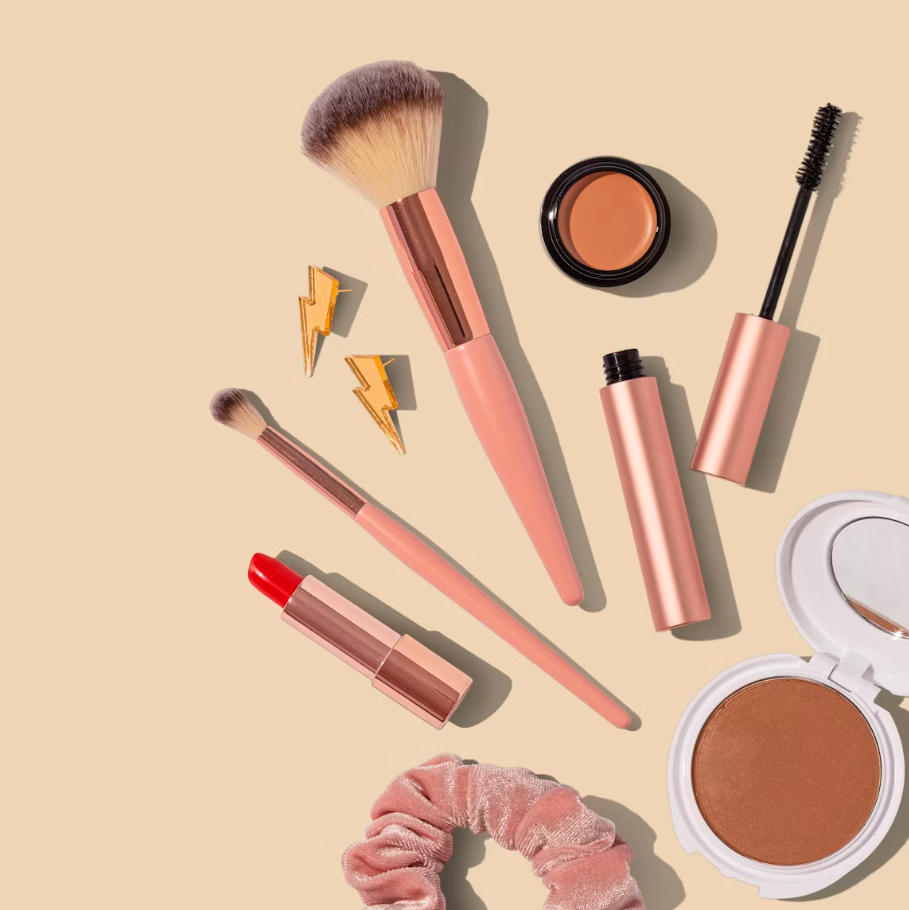
A practical daily set may include a fluffy powder brush, a blush or bronzer brush, a small blending brush for eyes, and a flat or angled brush for detail work. If you use cream products, choose brushes that are dense enough to blend without streaking. If you use powders, softer and fluffier brushes usually give a lighter finish.
Brush quality matters, but expensive is not automatically better. Look for bristles that feel soft, do not shed easily, and hold their shape after washing. Handles should feel comfortable and balanced in the hand.
Clean brushes regularly and let them dry fully before storing. Clean tools make makeup look better and help your routine feel more polished.
An Eyelash Curler for a More Awake Look
An eyelash curler is a small tool with a surprisingly noticeable effect. It can make lashes appear lifted and eyes look more open, even before mascara. For people who prefer minimal makeup, this one step can make the face look more refreshed without adding color or coverage.
Fit is important. Eye shapes vary, and not every curler works comfortably for every person. Look for a curler with a smooth opening and a soft cushion pad. The tool should not pinch or pull when used correctly.
Use it before mascara, not after. Curling lashes after mascara can make lashes feel stiff and may increase the chance of breakage. Gentle pressure is enough. There is no need to clamp aggressively.
Replace the cushion pad when it becomes worn. A fresh pad helps the tool work smoothly and comfortably.
Brow Tools for Clean, Natural Definition
Brows frame the face, and a few simple tools can keep them looking tidy without making them overly sculpted. A spoolie brush, angled tweezers, and small brow scissors are often enough for basic grooming.
A spoolie helps brush hairs into place and soften brow pencil or gel. Tweezers can remove obvious stray hairs, while small scissors can trim longer hairs carefully. The goal is not to reshape your entire brow every morning. It is to maintain a clean, natural look that suits your features.
Good lighting matters when using brow tools. Poor lighting can lead to over-plucking or uneven trimming. Step back from the mirror often so you can see the full face, not just one tiny section.
If you are unsure about shaping, keep grooming minimal. Removing a few stray hairs is safer than trying to create a dramatic new brow shape at home.
A Facial Roller or Gua Sha Tool
Facial rollers and gua sha tools have become popular for adding a calm, spa-like step to skincare routines. They can help distribute facial oil, serum, or moisturizer while creating a cooling, relaxing sensation.
For a simple routine, treat these tools as optional self-care accessories rather than miracle devices. Their biggest benefit is often the experience: a slow, soothing moment at the end of the day or a refreshing touch in the morning.
Material, shape, and comfort matter. A roller should move smoothly without squeaking or dragging. A gua sha tool should have rounded edges and feel comfortable in the hand. Use light pressure and pair the tool with enough skincare product so it glides easily.
Avoid pressing too hard. More pressure does not mean better results. The best use is gentle, consistent, and comfortable.
A Hair Dryer Brush for Faster Styling
A hair dryer brush can simplify the styling process by combining drying and shaping in one tool. It is especially useful for people who want smoother hair, more volume at the roots, or a softly styled finish without using a separate round brush and dryer.
The right hair dryer brush depends on hair length, texture, and styling goals. Larger barrels can create volume and a smooth finish on longer hair, while smaller barrels may offer more control for shorter styles. Heat settings are important because not every hair type needs high heat.
This tool is not always ideal for very wet hair. Many people get better results by letting hair air-dry partially or rough-drying first, then using the dryer brush for finishing. This can reduce styling time and help avoid unnecessary heat exposure.
Always consider weight and handle comfort. A bulky tool may look powerful but feel tiring to use, especially if you have thick or long hair.
A Heatless Styling Tool for Low-Effort Hair
Heatless curling rods, soft rollers, and flexible styling bands have become popular for a reason: they offer a way to shape hair without relying on daily heat. They are not perfect for every hair type, but they can be useful for people who want soft waves with less effort in the morning.
The main advantage is convenience. You set the hair, leave it for a period of time, and remove the tool to reveal shape or movement. Some people use heatless tools overnight, while others use them for a few hours while getting ready.
Comfort is essential. If a tool is uncomfortable to sleep in or difficult to secure, you may not use it regularly. Hair length also matters, as some heatless tools work better on medium to long hair.
Keep expectations realistic. Results vary depending on hair texture, dampness, product use, and technique. It may take a few tries to find the method that works best for you.
A Compact Beauty Mirror With Good Lighting
Good lighting can change your entire routine. A compact mirror with built-in lighting helps with makeup application, brow grooming, skincare checks, and travel routines. It is especially useful if your bathroom lighting is too yellow, too dim, or uneven.
Look for a mirror with adjustable brightness rather than one harsh light setting. Magnification can be helpful for detail work, but it should be used carefully. Spending too much time in a highly magnified mirror can make tiny imperfections look more dramatic than they are.
Portability is another advantage. A foldable or rechargeable mirror can move from bedroom to bathroom to suitcase without taking up much space.
A good beauty mirror does not make you more critical. It simply helps you see clearly so your routine feels more precise and less frustrating.
A Simple Manicure and Nail Care Kit
A basic nail care kit is useful even if you rarely wear polish. Clean, shaped nails can make hands look more polished with very little effort. A practical kit may include nail clippers, a glass file, a buffer, cuticle pusher, small scissors, and a nail brush.
A glass nail file is a smart choice for many people because it can shape nails smoothly and is easy to clean. A nail brush is helpful for keeping hands fresh after cooking, gardening, or daily errands.
Avoid over-buffing or cutting cuticles too aggressively. The goal is neat maintenance, not salon-level intensity at home. If you use polish, consider a quick-dry top coat or small cleanup brush for a more refined finish.
A tidy nail kit also prevents the common problem of using random tools from around the house, which can lead to uneven results.
An Electric Facial Hair or Detail Trimmer
A small facial hair or detail trimmer can be useful for quick grooming around areas such as the upper lip, chin, brows, or hairline, depending on the tool design. It can be more convenient than scheduling frequent appointments for minor maintenance.
Look for a trimmer with a gentle head, easy cleaning, and clear instructions. Some models are designed specifically for facial use, while others include attachments for brows or detail work. Choose a tool that matches the area you plan to groom.
Do not rush. Use the tool on clean, dry skin unless the instructions say otherwise, and avoid going over the same area repeatedly. If your skin is sensitive, test carefully and keep the routine minimal.
This is a practical tool for people who value quick touch-ups, but it is optional if you prefer waxing, threading, or leaving facial hair as it is.
Beauty Organizers That Make the Routine Easier
Organization may not sound glamorous, but it can completely change how your beauty routine feels. A clear organizer, brush cup, drawer divider, or travel pouch helps keep tools visible, clean, and easy to reach.
When products and tools are scattered, routines become slower and more stressful. You forget what you own, buy duplicates, and waste time searching. A simple organizer turns the process into something calmer and more deliberate.
Choose storage based on your space. A small countertop may benefit from a vertical organizer. A drawer may work better with dividers. If you travel often, a hanging toiletry bag or compact pouch can keep daily tools together.
The best organizer is not the prettiest one. It is the one that makes your routine easier to repeat.
What to Consider Before Buying Beauty Tools
Before adding a tool to your routine, consider how often you will use it, how easy it is to clean, and whether it suits your skin, hair, or lifestyle. A tool that requires careful maintenance may not be ideal if you prefer a fast routine.
Also think about storage. Beauty tools can quickly take over drawers and counters if you buy without a plan. If you do not have a clear place to keep it, you may not reach for it often.
For electric tools, check charging method, battery life, heat settings, safety features, and replacement parts. For manual tools, focus on comfort, material quality, and ease of cleaning.
Most importantly, avoid buying because of pressure. A tool may be trending, but that does not mean it belongs in your routine. Useful beauty tools should feel like support, not homework.
Common Mistakes to Avoid
One mistake is buying too many tools at once. This can make your routine feel cluttered before you know what actually works. Start with one or two tools that solve your most common frustrations.
Another mistake is ignoring cleaning habits. Brushes, sponges, towels, and skincare tools need regular care. If a tool is difficult to clean, it may not be practical for daily use.
It is also easy to overuse beauty tools. More brushing, more exfoliating, more heat, or more pressure does not automatically create better results. Gentle, consistent use is usually more useful than intense, occasional effort.
Finally, do not expect a tool to replace good basics. Sleep, hydration, suitable products, and a routine you can maintain still matter. Beauty tools can refine the process, but they work best when they support simple habits.
A Balanced Final Takeaway
The best beauty tools for a simple daily routine are not about creating perfection. They are about making ordinary moments feel easier and more polished. A soft towel, a clean sponge, a comfortable mirror, a reliable hair tool, or a neat organizer can bring a surprising amount of calm to the start and end of the day.
Choose tools that match your actual habits, not an imagined version of your routine. If a tool saves time, improves comfort, or helps you feel more put together with less effort, it has earned its place.
Conclusion
A simple beauty routine should feel like a pause, not a performance. The right tools can help you cleanse more comfortably, apply makeup more smoothly, style your hair with less frustration, and keep your space organized enough to enjoy the process.
Start with the basics you will use often, then add optional tools only when they solve a real need. Prioritize comfort, quality, easy cleaning, and realistic expectations. In the end, the most valuable beauty tools are not the ones that promise to transform everything overnight. They are the ones that make your everyday routine feel a little more graceful, efficient, and quietly luxurious.
FAQs
What beauty tools are best for beginners?
Beginners can start with a soft face towel, a makeup sponge, a few essential brushes, an eyelash curler, tweezers, and a simple beauty organizer. These tools are easy to use and support a natural daily routine without requiring advanced technique.
Do I need expensive beauty tools for good results?
Not necessarily. Many affordable beauty tools work well when they are comfortable, easy to clean, and suited to your routine. It is better to buy a few useful, well-made tools than a large collection of expensive items you rarely use.
How often should I clean makeup brushes and sponges?
Makeup sponges should be washed frequently, especially if used with liquid or cream products. Brushes used for complexion products should also be cleaned regularly, while powder and eye brushes can usually be cleaned based on use. Let all tools dry fully before storing.
Are facial rollers and gua sha tools necessary?
They are not necessary, but they can add a relaxing step to a skincare routine. Their main value is the soothing experience and the way they help spread skincare products. Use gentle pressure and avoid expecting dramatic results.
What should I avoid when buying beauty tools online?
Avoid buying tools without checking size, material, cleaning instructions, compatibility, and user feedback. Be cautious with exaggerated claims, especially for skincare devices. Choose tools that match your routine rather than products that only look impressive in photos.