There is a particular kind of optimism that comes with planning your first real outdoor day. You imagine fresh air, open trails, a soft breeze, maybe a picnic view that makes your camera roll look instantly more interesting. Then reality steps in. What shoes should you wear? How much water is enough? Do you need a technical backpack, a waterproof jacket, a first-aid kit, or all of the above?
For beginners, outdoor shopping can feel like walking into a language you have not learned yet. Gear descriptions are full of performance claims, technical fabrics, temperature ratings, pack capacities, and accessories that seem useful but may not be necessary for your first few outings. The good news is that getting started outdoors does not require an expensive collection of professional equipment. What it does require is a thoughtful approach.
The best outdoor essentials are not always the flashiest items. They are the pieces that keep you comfortable, prepared, and confident enough to enjoy the experience rather than worry through it. Whether you are planning a local nature walk, a beginner-friendly hike, a weekend camping trip, or simply spending more time outside, this guide will help you understand what matters, what can wait, and how to shop with a clear head.
Why Beginner Outdoor Gear Should Be Simple
Many new outdoor shoppers make the same mistake: they buy for an imagined future adventure instead of the activity they are actually doing next weekend. A person planning a two-hour local hike does not need the same setup as someone crossing mountain terrain for several days. Overbuying can be just as frustrating as underbuying because it adds cost, weight, and complexity.
A beginner-friendly outdoor kit should be built around three priorities: comfort, safety, and flexibility. Comfort keeps the day enjoyable. Safety helps you respond to weather, minor injuries, navigation issues, or unexpected delays. Flexibility means your gear can work across different simple activities instead of being limited to one narrow use.
Think of your first outdoor kit like a well-edited wardrobe. You do not need everything. You need the right foundation pieces that work together. A comfortable pair of shoes, a practical daypack, weather-aware clothing, water, sun protection, basic safety items, and a few thoughtful extras can take you surprisingly far.
Start with the Activity, Not the Gear Aisle
Before buying anything, ask yourself what kind of outdoor experience you are preparing for. A casual park walk, beach day, day hike, camping night, fishing trip, and beginner bike ride all require slightly different essentials. The clearer you are about the activity, the easier it becomes to avoid unnecessary purchases.
For short walks and city parks, your needs are simple: comfortable shoes, water, weather-appropriate layers, sun protection, and a small bag. For beginner hikes, you may want a proper daypack, a basic first-aid kit, snacks, a map or offline navigation, and a light rain layer. For camping, you add shelter, sleep gear, lighting, cooking basics, and food storage.
The goal is not to own the most gear. The goal is to have enough of the right gear for the conditions you are likely to meet. Beginners should focus on predictable, low-risk environments first, then build their kit as their experience grows.
Footwear: The Foundation of Every Outdoor Day
If there is one place where beginners should pay close attention, it is footwear. Uncomfortable shoes can turn a beautiful trail into a slow negotiation with blisters, sore arches, and tired legs. You do not always need heavy hiking boots, but you do need shoes that match the terrain.
For paved paths, gentle nature trails, and light outdoor use, supportive walking shoes or trail sneakers may be enough. For uneven ground, muddy paths, loose gravel, or longer hikes, hiking shoes or lightweight hiking boots can offer better grip and stability. Waterproof footwear may be useful if you often walk in wet conditions, but it can feel warmer and less breathable in hot weather.
Fit matters more than style. Look for enough toe room, secure heel support, and a sole that feels stable rather than slippery. Try shoes with the socks you plan to wear outdoors. If you are between sizes, remember that feet can swell slightly during long walks, especially in warm weather.
New outdoor shoes should be worn before your first longer trip. A short neighborhood walk can reveal rubbing, pressure points, or sizing issues before you are miles from your car.
Clothing Layers That Work with the Weather
Outdoor comfort is often about layers, not one perfect outfit. Weather can shift quickly, and your body temperature changes as you move, rest, climb, or sit in the shade. A simple layering system helps you adjust without carrying an entire closet.
Start with a comfortable base layer. For warm days, this might be a breathable T-shirt or lightweight long-sleeve top. For cooler weather, choose a moisture-wicking layer that helps keep sweat away from your skin. Cotton can feel comfortable at home, but it may stay damp for a long time outdoors, which can become uncomfortable when temperatures drop.
Add a mid layer when needed. A fleece, light insulated jacket, or warm pullover can help during chilly mornings, windy viewpoints, or evening camp moments. For outer protection, consider a rain jacket or wind-resistant shell. Beginners do not need the most advanced technical jacket, but having a light layer that blocks wind or rain can make a big difference.
Pants or shorts should allow movement. Stretchy hiking pants, joggers, or outdoor-friendly shorts are often more comfortable than stiff denim. If you are walking through brush, tall grass, or cooler conditions, longer pants can also provide extra coverage.
The Daypack: Your Portable Comfort Zone
A good daypack is one of the most useful outdoor essentials for beginners. It carries your water, snacks, layers, phone, keys, sunscreen, first-aid items, and anything else you need to keep close. For short outdoor activities, a small backpack may be enough. For beginner hikes, a pack in the range of 15 to 25 liters is often practical.
Look for padded shoulder straps, a comfortable back panel, and pockets that make sense for your habits. A water bottle pocket is useful. A front pocket for small items can save you from digging through everything whenever you need lip balm or a snack. A chest strap or waist strap may help distribute weight, especially if you carry more than a few light items.
Avoid packing too heavily. Beginners often bring too much because they are trying to prepare for every possible scenario. A better approach is to pack intentionally: water, food, layers, safety basics, navigation, sun protection, and personal necessities. Your pack should feel manageable from the beginning of the day to the end.
Hydration: More Important Than It Looks
Water is not glamorous, but it is one of the most important outdoor essentials. Even a short outing can become uncomfortable if you do not bring enough, especially in heat, direct sun, or dry conditions. For casual walks, one reusable bottle may be enough. For longer hikes or warm-weather activities, you may need more.
Beginners can choose between water bottles and hydration reservoirs. Bottles are simple, easy to clean, and easy to refill. Hydration reservoirs, often carried inside a backpack with a drinking tube, make it easier to sip regularly while walking. They are convenient for longer outings but require more cleaning and care.
A practical habit is to drink before you feel very thirsty. Thirst can sneak up slowly outdoors, particularly when you are distracted by scenery or conversation. If you are bringing pets or children, plan extra water for them too.
For remote or extended outings, some outdoor users carry water filters or purification tablets. Beginners on short, well-planned trips may not need these immediately, but they become worth considering as your routes become longer or less developed.
Food and Snacks That Keep Energy Steady
Outdoor food does not need to be complicated. For a few hours outside, simple snacks are usually enough. Think trail mix, granola bars, fruit, crackers, sandwiches, jerky, or other easy-to-carry foods that do not crush easily. Choose foods you actually like. A technically perfect snack is not helpful if it stays untouched in your bag.
For beginner hikes, bring a little more food than you think you will need. Delays happen. Trails take longer than expected. A viewpoint becomes too pretty to leave quickly. Having an extra snack is a small comfort that can prevent a tired mood from taking over.
For camping, food planning becomes more important. Beginners should start with simple meals that require minimal cooking and cleanup. A basic camp stove may be useful where permitted, but always check local rules before using open flames or cooking equipment outdoors.
Navigation: Do Not Rely on Signal Alone
One of the quiet mistakes beginners make is assuming their phone will always work. In many outdoor areas, reception may be weak, inconsistent, or unavailable. Your phone is still useful, but it should not be your only plan.
Before heading out, check the route, distance, estimated time, parking location, and trail conditions. Save maps offline when possible. Take a screenshot of key directions or trail information. If you are going somewhere unfamiliar, tell someone where you are going and when you expect to return.
A small physical map may feel old-fashioned, but it can be helpful in certain parks and trail systems. Beginners do not need advanced navigation tools for simple routes, but they should build the habit of knowing the plan before they arrive.
For longer or more remote activities, a compass, GPS device, or satellite communication tool may become relevant. For early outings, the smartest choice is to select well-marked beginner-friendly locations and prepare your route in advance.
Sun Protection Is Not Optional
Sun protection belongs in every beginner outdoor kit, even on cloudy days. Sun exposure can build gradually, and shade is not always available when you want it. A broad-brim hat or cap, sunglasses, sunscreen, and lightweight coverage can make the day more comfortable.
Sunscreen should be applied before you start and reapplied according to the product directions, especially if you sweat or spend hours outside. Sunglasses are not just a style accessory; they can reduce glare and make bright conditions easier on your eyes. A hat can help protect your face and keep you cooler in direct sun.
Clothing can also be part of your sun strategy. Lightweight long sleeves, breathable fabrics, and neck coverage can be useful for people who burn easily or spend extended time outdoors.
A Basic First-Aid Kit for Small Problems
Most beginner outdoor trips will not involve dramatic emergencies, but small issues are common. Blisters, scrapes, headaches, bug bites, and minor cuts can affect comfort. A compact first-aid kit is a smart addition to your pack.
Look for basics such as adhesive bandages, blister pads, antiseptic wipes, gauze, tape, tweezers, and any personal items you may need. If you take personal medication, carry it according to your needs and keep it protected. For group outings, consider whether anyone has allergies or specific health considerations that require planning.
A first-aid kit is only useful if you know what is inside. Open it at home, understand the contents, and replace items after use. Beginners should avoid treating the kit like a mysterious emergency box that stays unopened until something goes wrong.
Lighting: Small Item, Big Difference
A small headlamp or flashlight is easy to overlook until you need it. Even if you plan to be home before sunset, delays happen. A wrong turn, a longer lunch break, unexpected traffic near the trailhead, or a late campsite setup can leave you dealing with low light.
A headlamp is especially practical because it keeps your hands free. This is useful for walking, setting up camp, searching inside a bag, or handling simple tasks after dark. Check the batteries before leaving, or choose a rechargeable light and charge it ahead of time.
For casual daytime outings, lighting may feel unnecessary. For hikes, camping, or any activity that could stretch into evening, it is a small piece of gear worth carrying.
Weather Protection and Comfort Extras
The outdoors has its own personality, and sometimes it changes its mind. A clear morning can become windy. A mild afternoon can turn chilly. A light drizzle can make a trail feel completely different.
A packable rain jacket is one of the most useful comfort items for beginners. It does not have to be heavy, but it should be easy to carry. In cooler conditions, gloves, a beanie, or a warm layer can be helpful. In buggy areas, insect repellent can make the difference between a relaxing walk and a constant swatting session.
A small towel, wet wipes, hand sanitizer, and a trash bag are also useful. The trash bag can hold wet clothing, muddy shoes, food waste, or anything you need to carry out. Outdoor responsibility is simple: leave places as clean as you found them, or cleaner.
Camping Essentials for First-Timers
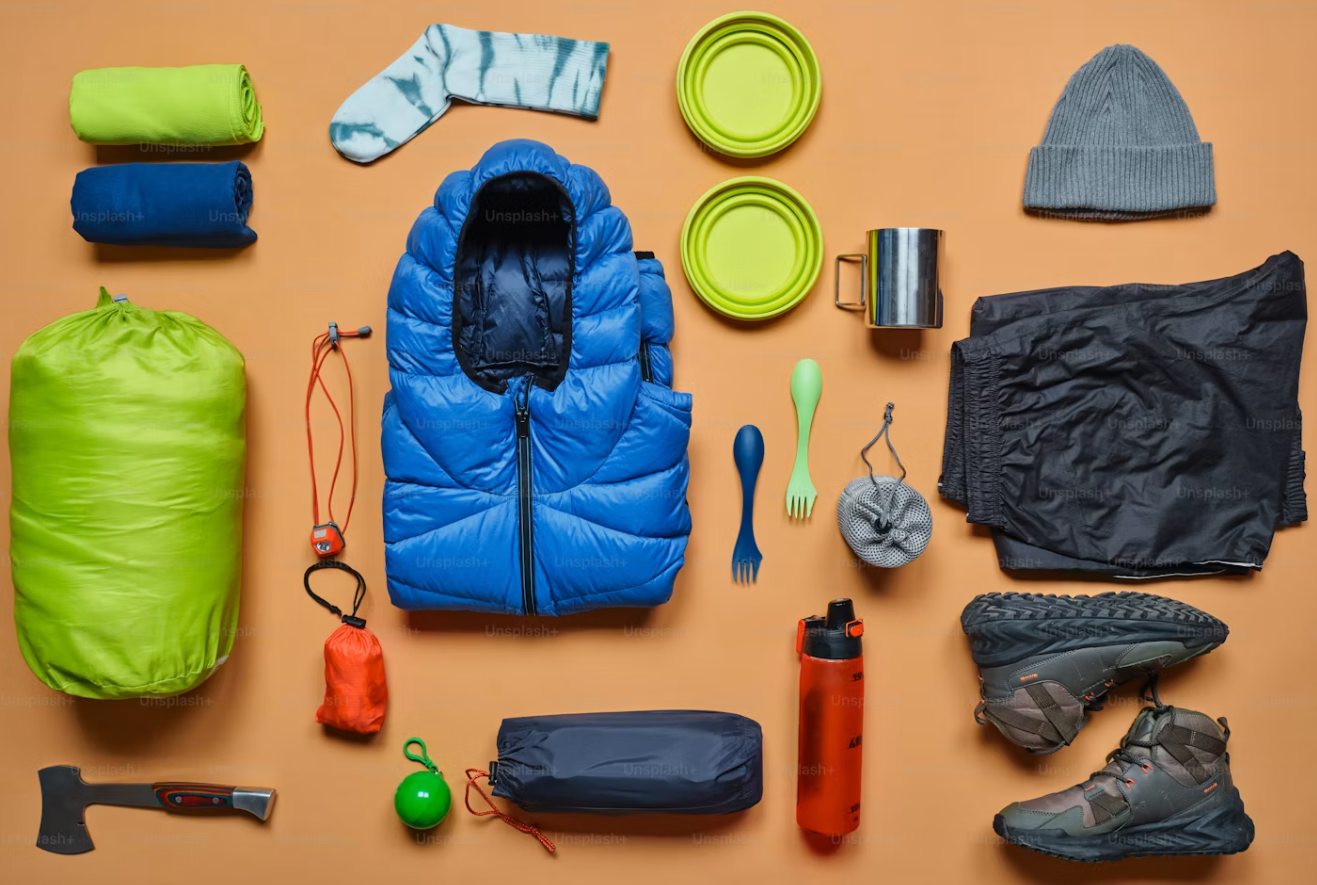
If your beginner outdoor plan includes camping, your essential list expands. Start with shelter, sleep, light, food, water, and basic hygiene. A tent should match the number of people using it and the expected weather. For first-time campers, ease of setup matters. Practice pitching the tent at home if you can.
A sleeping bag should match the overnight temperatures you expect, and a sleeping pad is more important than many beginners realize. It provides cushioning and helps insulate you from the ground. Even a beautiful campsite can feel miserable if you cannot sleep.
For cooking, keep it simple. A basic stove, fuel, lighter or matches where allowed, pot, utensils, and easy meals are enough for many beginner trips. Bring enough water for drinking, cooking, and cleaning, or confirm that safe water is available nearby.
Do not forget campsite comfort. A small chair, lantern, warm layer, and easy slip-on shoes can make camp life more pleasant. These are not always essential for survival, but they can make your first camping experience feel less like an endurance test and more like a calm night outdoors.
What Is Optional for Beginners
Not everything marketed as essential is necessary right away. Trekking poles can be helpful for balance, steep trails, or knee comfort, but not every beginner needs them for simple routes. Expensive technical jackets may be useful in demanding weather, but a basic reliable rain layer can be enough for mild beginner outings. Specialized cooking systems, advanced GPS devices, large survival kits, and premium camping furniture can wait until you know your habits.
The smartest way to buy outdoor gear is slowly. Start with versatile basics, use them, notice what felt missing, and upgrade with purpose. Your preferences will become clearer through experience. Maybe you care most about lighter gear. Maybe comfort matters more than compact size. Maybe you discover that you love camping but prefer short hikes, or that you enjoy long walks but have no interest in sleeping outside.
Buying gradually also helps you avoid clutter. Outdoor gear can take up space quickly, and unused items have a way of becoming expensive storage decorations.
Common Mistakes Beginners Should Avoid
The first mistake is dressing for the weather at home instead of the weather outdoors. A trail can be cooler, hotter, windier, or wetter than your neighborhood. Always check the location you are visiting, not just your city forecast.
The second mistake is wearing brand-new shoes on a long outing. Even high-quality shoes can cause discomfort if they are not broken in. Give them a trial run before the main day.
The third mistake is carrying too little water. It is better to return with some water left than to run out too early. This is especially true in warm climates or exposed areas.
The fourth mistake is ignoring time. Beginners may underestimate how long a route will take, especially with breaks, photos, children, pets, or uneven terrain. Start earlier than you think you need to, and choose manageable distances.
The fifth mistake is buying based only on aesthetics. Attractive gear is nice, and there is nothing wrong with enjoying good design, but outdoor essentials should first work well for your body, activity, and conditions.
How to Choose Outdoor Gear More Thoughtfully
When comparing products, look beyond the most polished photos. Ask practical questions. Is it easy to use? Is it suitable for your climate? Does it fit your body comfortably? Is it too heavy for your planned activity? Can it serve more than one purpose? Is it easy to clean, pack, store, or repair?
Reviews can be helpful, but read them with context. A negative review from someone using a product in extreme conditions may not apply to your casual weekend plans. A glowing review may come from someone with completely different priorities. Look for patterns rather than single opinions.
Price is another area where balance matters. The cheapest item is not always the best value if it fails quickly or feels uncomfortable. The most expensive item is not automatically the smartest choice either. Beginners often do best with reliable mid-range gear that covers the basics without overcommitting.
A Simple Beginner Outdoor Checklist
For a short outdoor walk or easy hike, consider starting with comfortable footwear, breathable clothing, a small backpack, water, snacks, sun protection, a light layer, basic first-aid items, phone with offline information, and a small light if there is any chance you may be out late.
For camping, add a tent, sleeping bag, sleeping pad, camp light, simple cooking setup, food, extra water, hygiene items, weather layers, trash bags, and any campsite-specific requirements. Always check the rules for the area you are visiting, including fire restrictions, parking permits, pet rules, and waste guidelines.
This checklist should be adjusted, not followed blindly. Outdoor preparation is personal. Climate, terrain, season, distance, fitness level, and group size all matter.
Building Confidence Outdoors
The best outdoor essential for beginners is not something you can buy. It is confidence built through small, positive experiences. Start with places that feel approachable. Choose a short trail before a long one. Try a daytime picnic before an overnight camping trip. Practice using your gear at home. Learn what feels comfortable on your body and what you prefer to leave behind.
Over time, the outdoors becomes less intimidating. The unfamiliar details become routines. Packing gets faster. Clothing choices become easier. You begin to know how much water you drink, which snacks you like, what kind of pack feels comfortable, and how far you enjoy walking.
Good gear supports the experience, but it is not the experience itself. The point is not to look like an expert. The point is to feel prepared enough to notice the birdsong, the changing light, the quiet path, the warm drink at camp, or the simple pleasure of being away from screens for a while.
Conclusion
Outdoor essentials for beginners should make nature feel more accessible, not more complicated. Start with the basics: comfortable footwear, practical layers, water, food, sun protection, a daypack, navigation awareness, first-aid supplies, and weather-ready extras. Add camping gear only when your plans require it, and avoid buying advanced equipment before you know your real needs.
A thoughtful beginner kit is not about owning every outdoor product on the market. It is about choosing dependable items that help you stay comfortable, safe, and present. Begin simply, learn from each outing, and let your gear collection grow with your confidence. The outdoors does not ask for perfection. It simply rewards preparation, curiosity, and the willingness to step outside.
FAQs
What are the most important outdoor essentials for beginners?
The most important beginner outdoor essentials are comfortable footwear, weather-appropriate clothing, water, snacks, a small backpack, sun protection, basic first-aid supplies, and a way to navigate. These items cover comfort, safety, and preparation for most simple outdoor activities.
Do beginners need expensive hiking gear?
Beginners do not need expensive gear for casual walks, easy hikes, or simple outdoor days. It is better to start with reliable basics that match your activity and climate. As you gain experience, you can upgrade specific items based on what you actually use and need.
What should I bring on my first beginner hike?
For a first beginner hike, bring supportive shoes, water, snacks, a light layer, sun protection, a small first-aid kit, your phone with offline route details, and a backpack to carry everything comfortably. Choose a well-marked route and check the weather before leaving.
Are hiking boots necessary for beginners?
Hiking boots are not always necessary. For easy trails and dry conditions, trail shoes or supportive walking shoes may be enough. Hiking boots can be helpful for rough terrain, wet paths, ankle support, or longer routes, but fit and comfort matter more than the label.
How can I avoid overpacking for outdoor activities?
Start by matching your gear to the activity, weather, distance, and location. Pack essentials first, then add only items that solve a realistic problem. After each outing, notice what you used, what stayed untouched, and what you wished you had brought. This helps you refine your kit over time.